
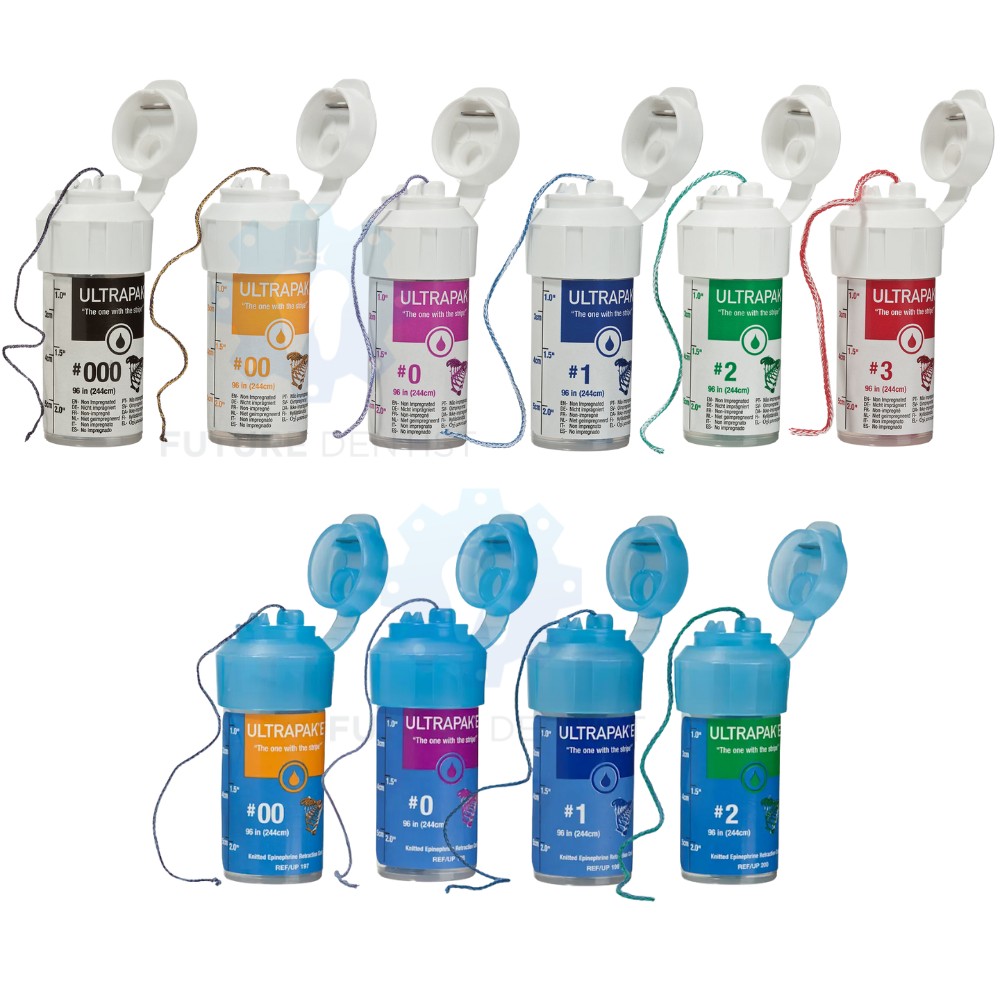
UltraDent Ultrapak and Ultrapak E
Price range: 750 EGP through 990 EGP
Bottle Contains 244Cm Cord
Made in USA By UltraDent
THE ONE WITH THE STRIPE!™
With easy packing, excellent absorption, and exceptional retention, the proprietary knitted design of the Ultrapak cord has been the preferred choice for years.
Listed as a “CAN’T LIVE WITHOUT” product by a prominent independent research institute.
• The original knitted cord
• Provides optimal tissue displacement and detailed marginsfor quality impressions
• Facilitates easy packing and stays in place better than twisted or braided cord
• Compresses upon packing then expands for optimal retraction
• Available with or without epinephrine
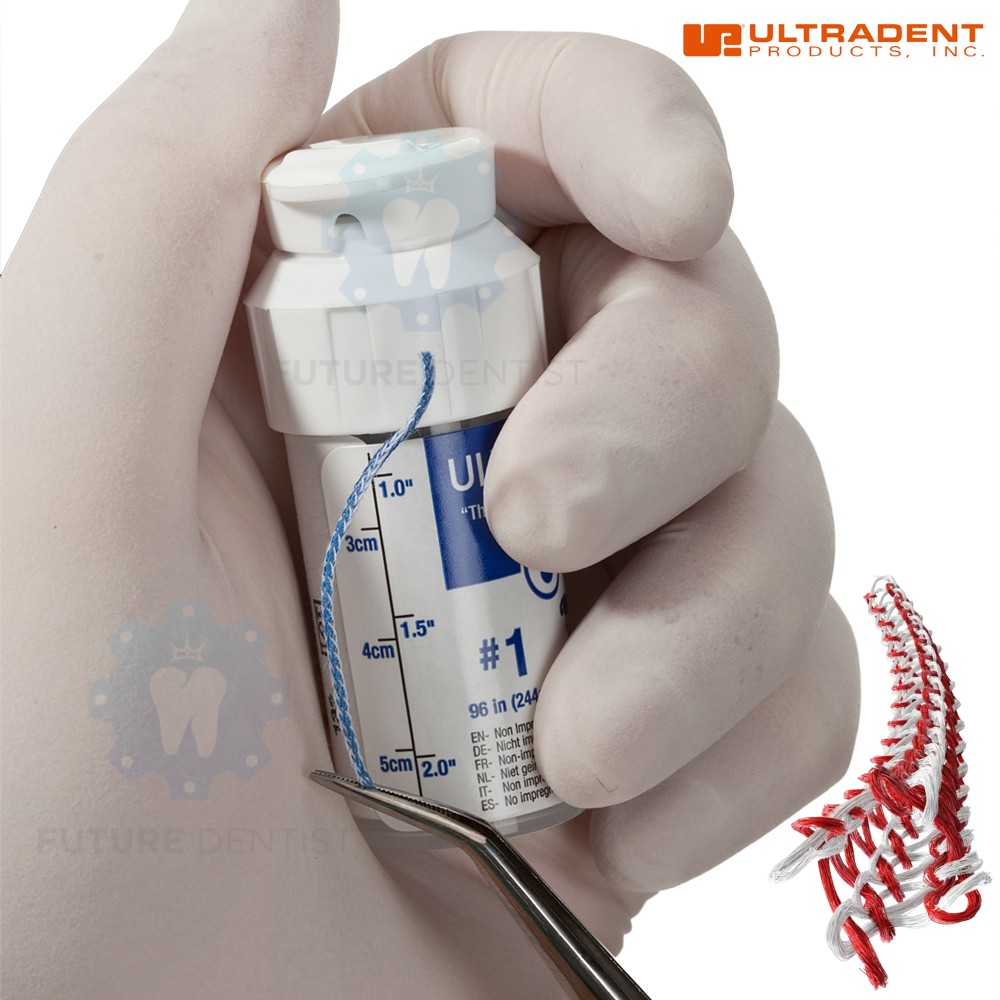
Ultrapak cord is made of 100% cotton which has been knitted into thousands of tiny loops to form long, interlocking chains.
After hemostasis is achieved, this unique knitted design exerts a gentle, continuous outward force following placement as the knitted loops seek to open.
Optimal tissue displacement occurs in 5 minutes.
Ultrapak E knitted cord is impregnated with racemic epinephrine hydrochloride.
Ultrapak cord can also be used to deliver ferric sulfate solutions subgingivally for sulcular fluid control.
Ultrapak cord is designed to enhance tissue management techniques that use ViscoStat™ and Astringedent™ hemostatics.
Conventional techniques using alum, aluminum chloride, etc. are also enhanced when using Ultrapak plain knitted cords, which carry significantly greater quantities of hemostatic solution than conventional cords.
Note: Do not use Ultrapak E knitted cord or other epinephrine preparations with ferric sulfate solutions, including ViscoStat,
Astringedent, and Astringedent X hemostatics, as blue/black precipitate will occur.
Pre-Preparation Packing Technique
See Instructions for Use for complete instructions, warnings, and precautions.
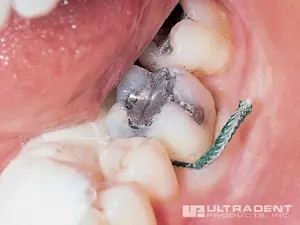
Step One
PREPACK
To ensure cord retention during preparation, use a cord large enough to firmly compress into sulcus.
Open proximal contacts and place Ultrapak knitted cord soaked in hemostatic solution.
Because Ultrapak cord compresses upon packing, use a cord size that appears too large.
The thin Ultrapak™ Packer packing instrument quickly slips cord into position.
The knitted cord’s unique design (interlocking loops) facilitates easy packing and locks it into place.
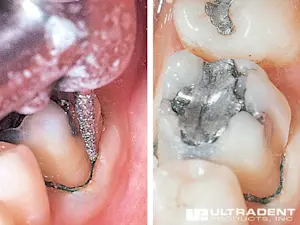
Step Two
PREPARATION
Extend margin subgingivally by cutting partway into knitted cord, which won’t entangle in the diamond bur.
Remove remnant of cord with calcium hydroxide applicator (tiny ball end). Bleeding is minimal. A small portion of uncut tooth above the gingival attachment is preserved to record in the impression.
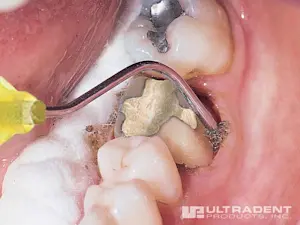
Step Three
HEMOSTASIS AND IMPRESSION
Rub the Metal Dento-Infusor™ tip against bleeding tissue as solution is slowly expressed.
Rinse with a firm air/water spray to clean and check for complete hemostasis.
If bleeding is noted, repeat these steps.
If additional retraction is required, repack with appropriate-size cord. Air dry and make impression.
Double-Cord Technique
See Instructions for Use for complete instructions, warnings, and precautions.
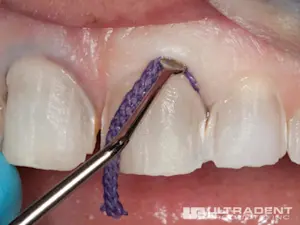
Step One
The most common challenges in getting a quality impression are adequate tissue retraction and sufficient moisture control.
Try a double retraction cord technique combined with effective hemostatic agents to alleviate both.
FIRST CORD
Once hemostasis is achieved, carefully place a single cord–such as Ultrapak cord #00–as deep as possible into the sulcus.
Use Fischer’s Ultrapak™ Packers packing instruments to place cords properly and efficiently.
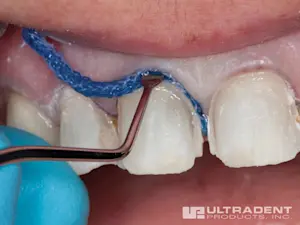
Step Two
SECOND CORD
Place a second, thicker cord soaked in a hemostatic agent to expand the tissue laterally.
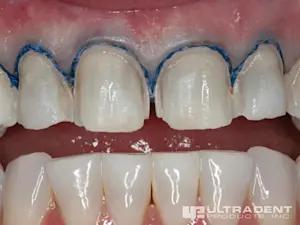
Step Two
RINSE/DRY
Rinse the area well and lightly dry.
| Size | UltraPak E 00, UltraPak E 0, UltraPak E 1, UltraPak E 2, UltraPak 000, UltraPak 00, UltraPak 0, UltraPak 1, UltraPak 2, UltraPak 3 |
|---|
Only logged in customers who have purchased this product may leave a review.
Related products


Reviews
There are no reviews yet.